15 stages · 816 km

Gradients and elevation

Ascents: 3821m
Descents: 4133m
Lowest point: -1m
Highest point: 582m

Road types

392km (48%) By road
375km (46%) Cycle path
252km (31%) Provisional itinerary

Surface

46km (116%) Smooth
30km (77%) Unknown
3km (7%) Rough

15 stages used

Le Perthus / Argelès sur Mer

1 Le Perthus / Argelès sur Mer

39 km
2 h 25 min
I’m used to cycling
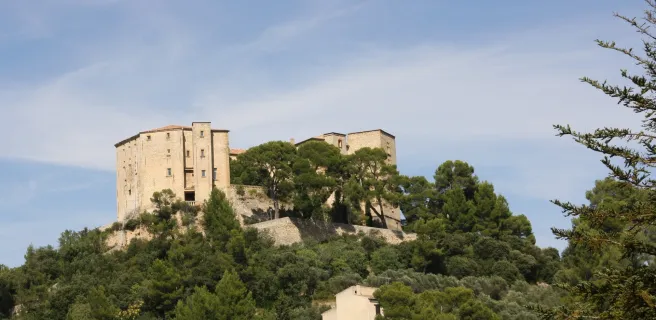
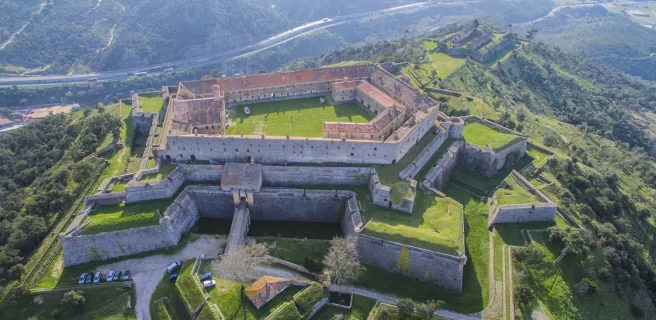
The cycling adventure along the Méditerranée à Vélo starts in the Pyrenees. Getting in the saddle at Le Perthus, be prepared for a demanding rhythm at the start. Make the effort to climb to Bellegarde Fort to enjoy its vast views over the Catalan mountains. Then the way becomes easier as you descend along what feels like a giant toboggan – in fact a cement track, followed by the D13C county road – whisking you down through dense forests. You’re never far from the Tech River, its valley guiding you to the sea. Then a very straight path leads you to Argelès. Branch off to explore the charming villages just off the cycle path.
Argelès sur Mer / Leucate

2 Argelès sur Mer / Leucate

51 km
3 h 25 min
I’m starting out / with the family
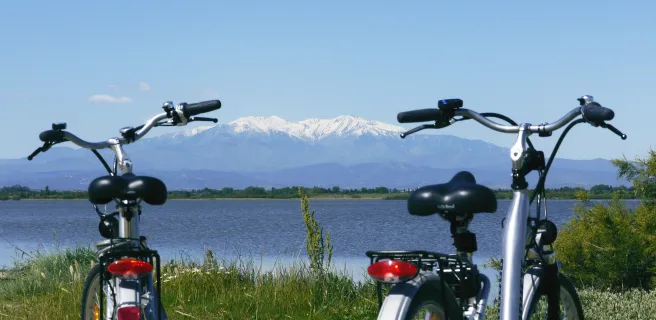
On this, the first coastal stage of the Mediterranean Cycle Route, it’s a joy cycling along, taking in the Med on the track running alongside the beaches of Argelès-Plage. Next comes the resort of St-Cyprien, with its commercial port and very popular seafront. Then on to Canet-en-Roussillon and the Agly Greenway, providing a majestic way to Port-Barcarès. At this port, seeing all the fish on sale will help you work up an appetite. The cycle track to Corrège Point offers a splendid view over Port-Leucate. Then enjoy the lovely track through the pines along the isthmus to Le Grau de Leucate. The panoramic cycle path around Leucate Lagoon takes you gently on to Leucate’s suburbs.
Leucate / Narbonne

3 Leucate / Narbonne

38 km
2 h 36 min
I’m used to cycling
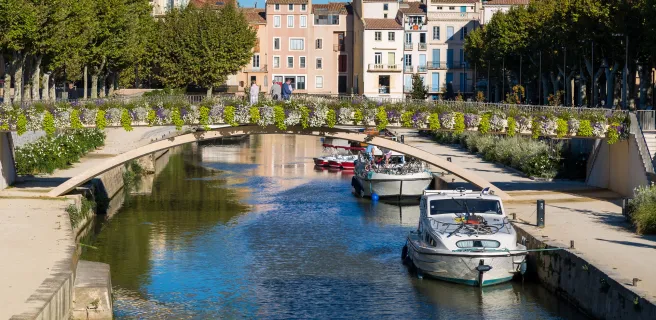
Cycle up via a small road to the Leucate Plateau and your reward is a picture-postcard view of olive groves, vineyards and dry-stone walls. The panoramas are magnificent too as you descend to Les Coussolles Beach and La Palme Lagoon. The cycle route then follows the train line to reach Port-la-Nouvelle. This is a lively harbour where you might, for example, witness a freight ship being loaded. It lies at the end of the Canal de la Robine, listed as a UNESCO World Heritage Site since 1996. The atmosphere then changes as you cycle along towpaths, past locks marking your progress to the city of Narbonne with its splendid cathedral complex and covered market.
Narbonne / Béziers

4 Narbonne / Béziers

60 km
3 h 35 min
I’m used to cycling
The Moulin du Gua with its brasserie restaurant marks the end of the Narbonne city section. At Le Somail, the Mediterranean Cycle Route and Canal des 2 Mers à Vélo cycle routes meet. The Tunnel du Malpas was a major piece of civil engineering to carry the canal under Ensérune’ s hill. It’s worth cycling up to the Oppidum d’Ensérune, a significant pre-Roman settlement with views down on the extraordinary dried-out Montaldy Lake. The sites get even more remarkable along this stretch, with Fonseranes’s unique nine locks and the splendid canal-bridge over the Orb, a breath-taking engineering feat, offering views onto the city of Béziers.

It is advisable to request written authorization to cycle across these parts from VNF, the managing authority, in accordance with Article R4241-68 of the French Code des Transports.
Béziers / Sète

5 Béziers / Sète

51 km
3 h 19 min
I’m used to cycling
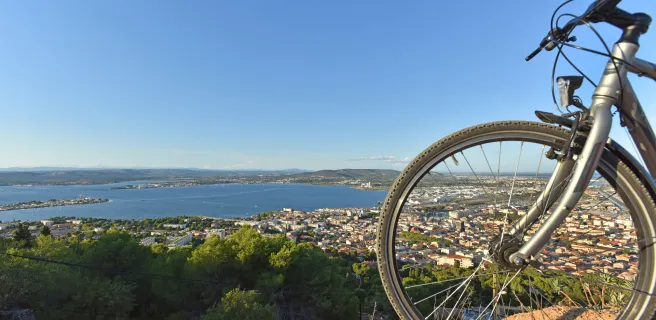
From Béziers’s port, the Canal du Midi à Vélo route directs you back to the Med. From Roque Haute bridge, you can easily access Portiragnes Beach by bike to enjoy a refreshing dip. Also stop to admire Le Libron’s curious adjustable aqueduct and Agde’s circular lock. Agde Cathedral, with its bell-tower dominating the Hérault River, calls on visitors to explore the ancient city below, built from black basalt. The Canal du Midi merges with the Etang de Thau lagoon at the level of Les Onglous lighthouse. From Marseillan-Plage, Le Lido Greenway sticks to the Mediterranean, leading you to Sète and its museums. How long will you resist the call of the sea for a swim along this stretch?

It is advisable to request written authorization to cycle across these parts from VNF, the managing authority, in accordance with Article R4241-68 of the French Code des Transports.
Sète / Le Grau-du-Roi

6 Sète / Le Grau-du-Roi

57 km
3 h 51 min
I’m used to cycling
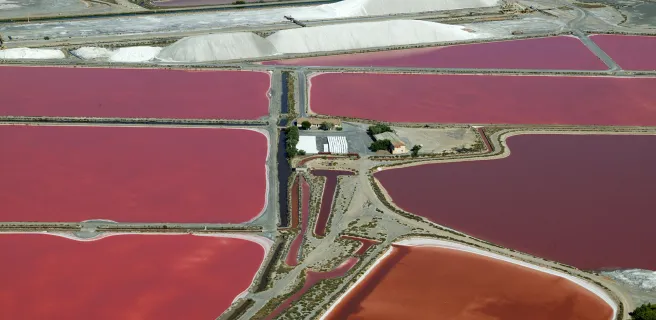
On this Mediterranean Cycle Route stage, keep towel and bathers at the top of your pannier! For lunch, taste local shellfish accompanied by a Muscat de Frontignan wine, the perfect reward for tackling this watery scenery. Towards Montpellier, the route meanders between lagoons and beaches. Make a detour to Saint-Pierre de Maguelone Cathedral, the Gardiole Range in the background covered in typical garrigue scrubland. Then head for the lighthouse at Palavas-les-Flots. Next, the great pyramids of La Grande Motte call, man-made reflections of the grand Pic St-Loup rock inland. At the port-resort of Le Grau-du-Roi, why not try some nautical sliding sports, witness a Camargue bull run or savour local produce?
Le Grau-du-Roi / Beaucaire -Tarascon

7 Le Grau-du-Roi / Beaucaire -Tarascon

68 km
4 h 44 min
I’m used to cycling
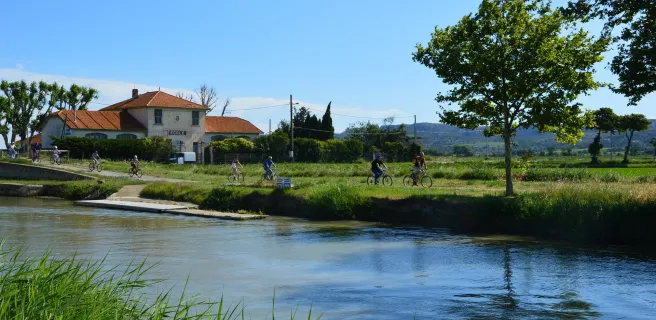
Enjoy the Camargue’s environment further on this stage of the Mediterranean Cycle Route. Cycle beside the Canal du Rhône à Sète, then across a plain dotted with lakes and irrigation canals and crisscrossed by tracks leading to traditional ‘mas’ (farms). Some of the cyclists you encounter will be finishing their journey along ViaRhôna. At the level of Fourques, you can head to Arles with its amazing Roman and Romanesque legacies. Saint-Gilles, at the foot of the wine-producing Coteaux des Costières, has a fine medieval centre. Discover Beaucaire, with its river port, before crossing to Tarascon-sur-Rhône, its imposing fort dominating the opposite bank.
Beaucaire - Tarascon / Cavaillon

8 Beaucaire - Tarascon / Cavaillon

39 km
3 h 19 min
I’m used to cycling
Guarding the Rhône, Tarascon’s medieval fort signals the entrance to the Alpilles for cyclists on the Méditerranée à Vélo route. The town of St-Rémy-de-Provence makes an unmissable stop for atmosphere and for understanding Van Gogh’s fascination with this area, marked by the special light emanating from the local limestone. The greenway from St-Etienne-du-Grès to St-Rémy-de-Provence is a successful transformation of a former rail line, with stopping points for cyclists as well as locals to enjoy. The last stretch of this stage takes you along pretty little farm tracks, with beautiful views over the Alpilles. A cycle path leads you across the Durance River, facilitating your arrival in the town of Cavaillon.
Cavaillon / Apt

9 Cavaillon / Apt

34 km
2 h 25 min
I’m used to cycling
The Mediterraneen Cycle Route joins up with Le Luberon à Vélo, in this area where lavender prospers. Nestling at the foot of the Petit Luberon Range, Les Taillades mill and its waterwheel will surprise you. To join Le Calavon Greenway, go via Robion, a marvellously typical Provençal village, with its central square shaded by plane trees, its old-stone architecture and its fountain. Once on the lovely greenway, take in the Luberon, from the Lavender Museum at Coustellet to the picnic stop set up at the former station at Goult. Pause at the end of your cycling day to contemplate the venerable old Pont Julien bridge, before visiting the pedestrian streets of Apt. This stage is good for families once you’ve joined Le Calavon Greenway.
Apt / Manosque

10 Apt / Manosque

83 km
5 h 50 min
it’s steep
Explore the old pedestrian streets of historic Apt, plus, on Saturday mornings, the major Provençal market. Then head back onto the heights of Le Calavon Greenway. Also note that thanks to the Circuit des Ocres à Vélo, Apt is a great starting point for discovering the colourful little ‘Colorado Provençal’ area. Note how the mountains get larger leaving the county of Vaucluse for the Alpes de Haute-Provence, Lure Mountain standing out. Around each turn in the road, surprising discoveries await: Céreste Roman bridge, Carluc Priory, the perched villages of Reillanne and Lincel, and the cités de caractère of Mane and Dauphin… Carry on through lavender fields, past old-stone farms, up to Manosque.
Manosque / Meyrargues

11 Manosque / Meyrargues

28 km
7 h 10 min
Given the actual state of affairs on this stage, it is highly recommended that you take a train between Manosque and Meyrargues, as no existing way is considered satisfactory for the time being in terms of security for cyclists on the Mediterraneen Cycle Route. See under.

Meyrargues / Draguignan

12 Meyrargues / Draguignan

104 km
6 h 04 min
it’s steep
Play at spotting perched castles at the start of this joyous stage of the Mediterranean Cycle Route through the Haut-Var area. Many cyclists you encounter will be following the circuit Les Châteaux de l’Ouest Haut-Var. The privately-owned Château de St-Martin-de-Pallières offers a perfect example of the remarkable castles of these parts, dominating their villages. After steep portions on quiet road, you join easier stretches on former train lines. Les Carmes’s pools at Barjols and Sillans Waterfall provide refreshing stops. Between Salernes and Flayosc, a former portion of train line takes you through a staggering, almost wild defile. Once the slope up to Le Flayosquet tackled, enjoy the descent to Draguignan, although this is technically demanding.
Draguignan / Cannes

13 Draguignan / Cannes

90 km
4 h 59 min
it’s steep
Leaving Draguignan, tackle a series of wooded hills up to St-Martin. After a stretch crossing St-Pons’s vine-filled valley, the Mediterranean Cycle Route route joins the Route des Gorges at the level of Figanières. After the charming village of Callas, a steep ascent to the Boussaque Pass is then counterbalanced by a lovely descent along the D25 road to Bargemon. Next, a former rail line going through wooded slopes acts as your guide, the highlight here Rayol Viaduct, before you reach Fayence, reputed for hang-gliding. Lastly, the route follows small county roads around Grasse, known for its fields of flowers, used to make world-famous perfumes, before leading you down to the Med and Cannes.
Cannes / Nice

14 Cannes / Nice

36 km
2 h 23 min
I’m starting out / with the family
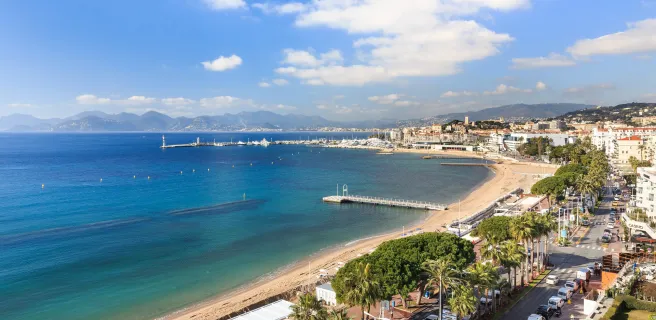
This is of course the red carpet stretch of the Mediterranean Cycle Route! A newly laid-out cycle path takes you along the Golfe de la Napoule. On Cannes’s western Bocca Cabana seafront lined with palms, choose from a wide range of sports. Next come Cannes’s port and the famous La Croisette with its cape – from here, admire the Lérins Islands just out to sea. Continue on to Juan-les-Pins, then Antibes, where covered market is hugely popular. Enjoy exploring the harbour. Past Villeneuve-Loubet’s marina, join the lovely cycle track through Cagnes-sur-Mer. Cruise along the coast to Nice’s Promenade des Anglais, from which you can discover the historic city. Many cyclists stop for a harbour-side drink at the specially-geared Café du Cycliste, contemplating the Corsica ferries coming and going.
Nice / Menton

15 Nice / Menton

39 km
2 h 35 min
it’s steep
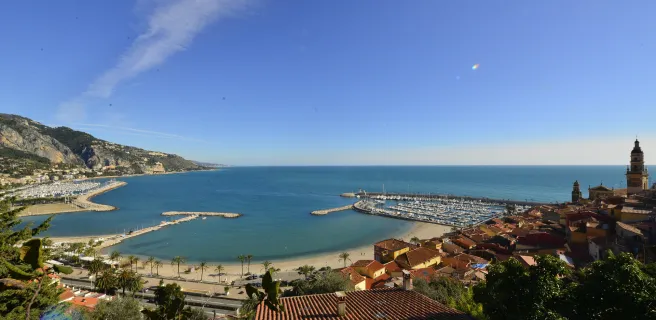
The Bay of Villefranche-sur-Mer marks the start of your ascent to the Grande Corniche. Climb to the Èze Pass at 507m in altitude. This is your route to reach Menton, renowned for its citrus fruits and festival. Given the altitude you’ve reached, you’re rewarded with staggering plunging views down on St-Jean Cap-Ferrat, Beaulieu Bay and Cap d’Ail. On the free-wheeling descent to Menton, do stop to explore La Turbie and Roquebrune-Cap-Martin. At Menton, the Jean Cocteau Museum, the historic centre and Menton music festival count among memorable reasons for visiting this resort on the Italian frontier. The customs post has long stood unoccupied, inciting you to continue your Mediterranean cycling adventure uninterrupted along EuroVelo 8. Avanti!
Afficher les étapes